Writing · August 12, 2026
The Work After the Prompt
Getting to a first version was never the whole job.
In this essay: Synthetiq, an AI-native application builderBuilding a product has never been just turning an idea into an interface. You have to carry it far enough that someone else can understand it, use it, and come back to it tomorrow.
That means more than the product itself. There is the brief, the feedback, the account a customer needs to sign in to try it, the version someone needs to review, the deployment, and a record of how the team got there. For small teams, the hard part is usually that all of this is scattered across tools and arrives at different times.
AI changes part of that. A product leader can take a rough problem and a point of view and make something useful enough to react to in hours. It can include real flows, decent copy, and enough behavior to help another person see the idea. That makes it cheaper to learn early.
But getting to a first version was never the whole job.
When it is easier to generate an interface, the important question becomes whether you can carry the work past that first screen. The prototype still needs a requirement that survives more than one conversation. Feedback still needs to lead to a deliberate change. A customer still needs to get in. The team still needs to know what changed, why it changed, and what is actually live.
A working prototype is not a product yet.
The first version can make that easy to miss. The happy path works. The copy is there. The interaction feels plausible. Then someone else touches it. They need a real login. They find an edge case. A teammate asks what the requirement was. A change creates another problem. Someone needs to explain what is deployed. That is when the product starts to show itself.
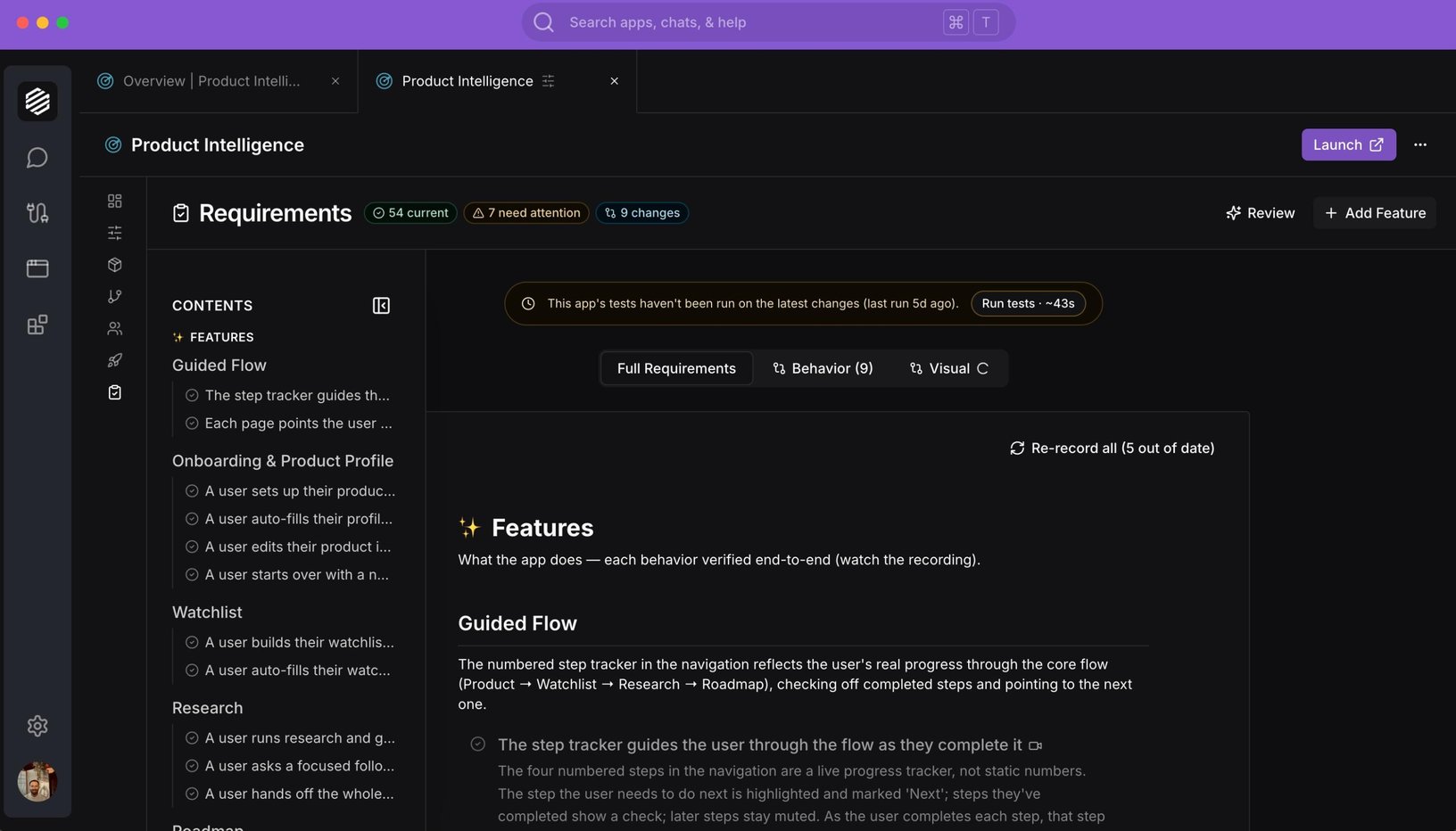
This is where the PRD matters. It should not be a document written at the beginning, read by a few people, and abandoned while the product changes. It should be a working record of the original intent, what the team learned, the decisions already made, and the questions that remain. It has to stay close enough to the product that it does not become a story about a version that no longer exists. That is how Synthetiq, an AI-native application builder, treats it: the PRD lives beside the app as a requirements workspace, and it grows as the product does.
Feedback works the same way. A screenshot or recorded demo shows more than the work. It captures what someone saw, where their expectations broke, and what may need to change. When that context gets flattened into a ticket or message thread, the person doing the next round has to piece the problem back together.
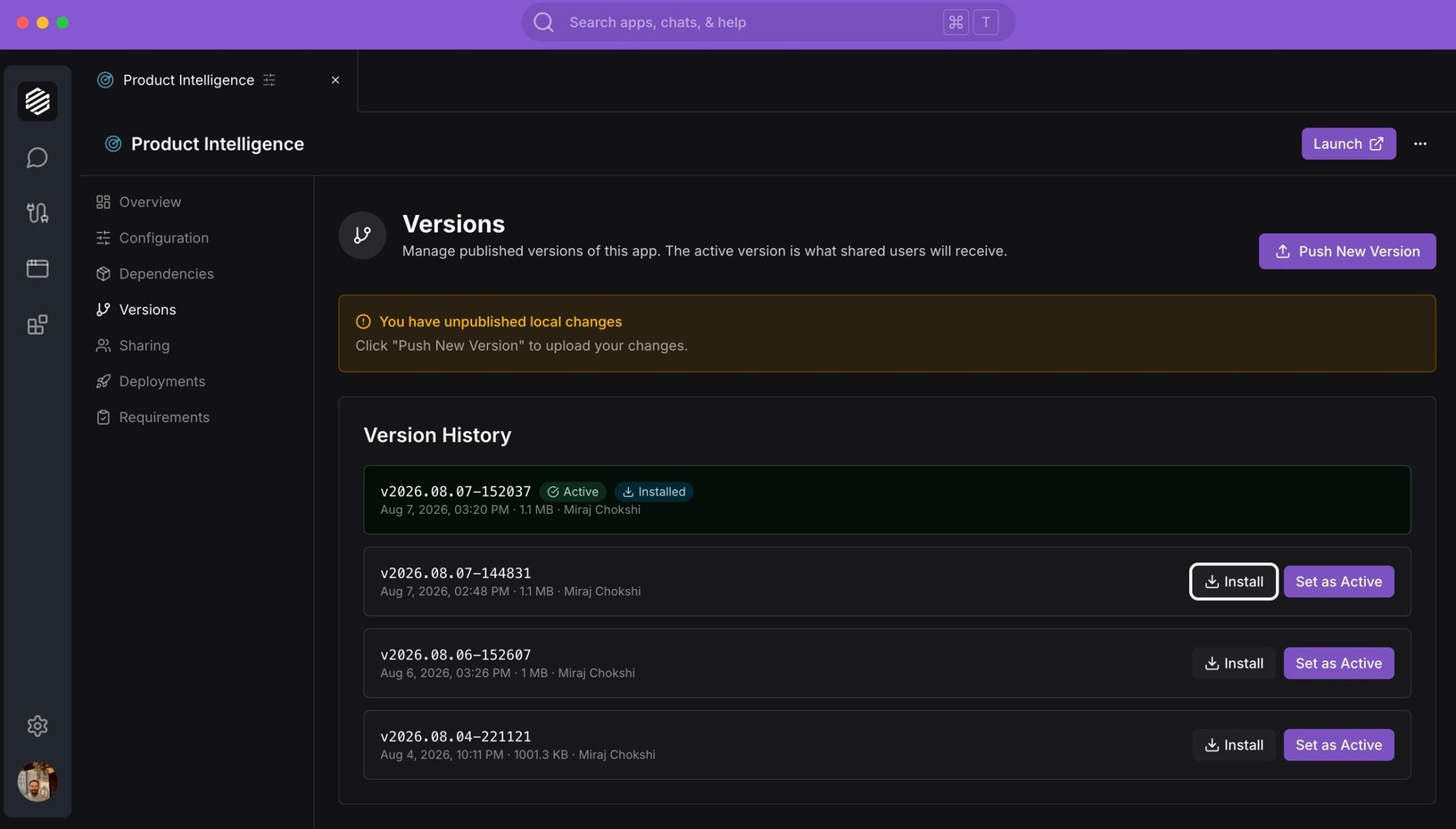
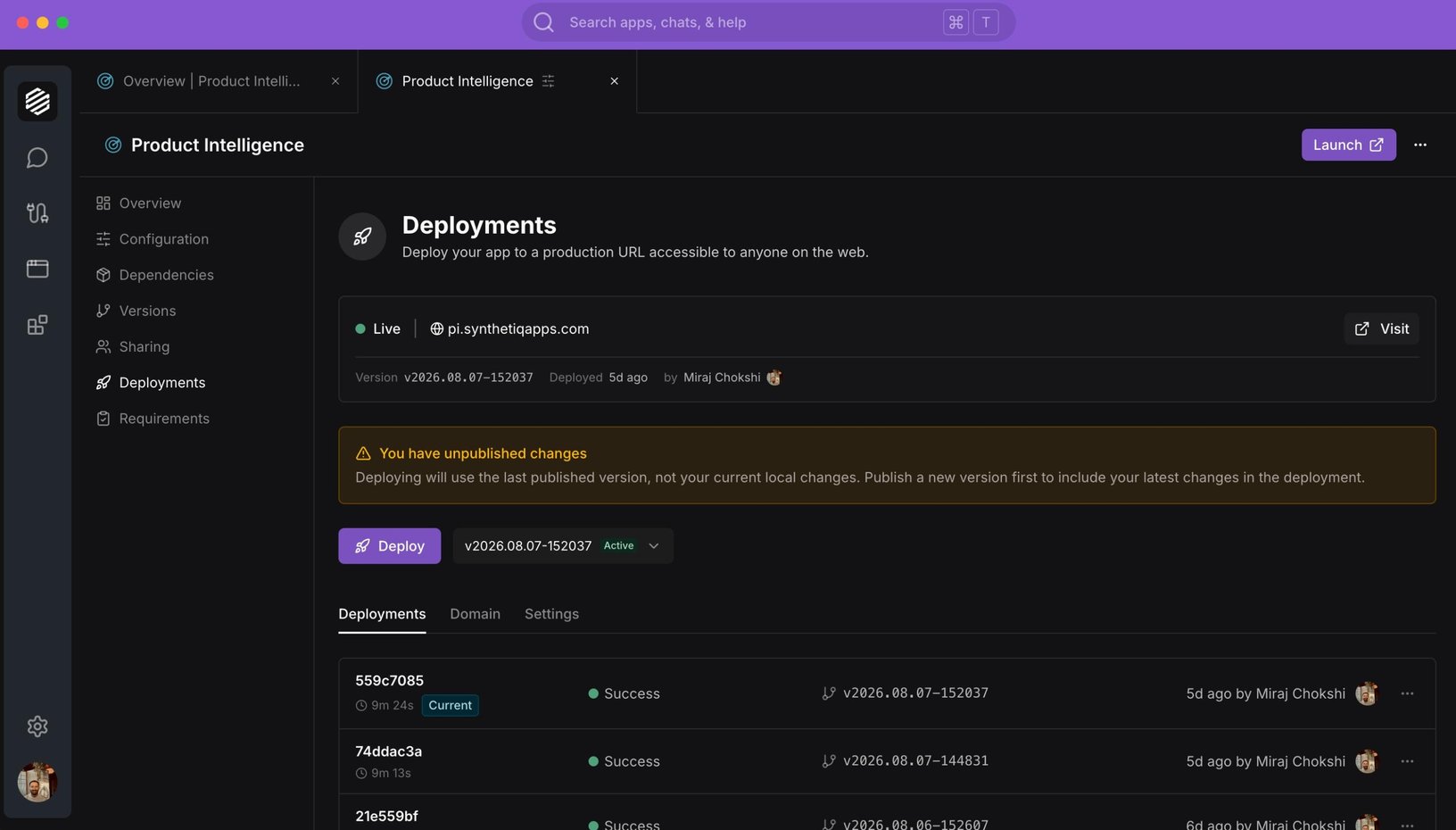
Versioning and deployment become just as important once someone depends on the application. A team needs to see what changed, compare versions, make a deliberate release, and have a way back when something goes wrong. It needs to know that what it is sharing is real, not just a convincing local preview.
Authentication is a simple example. Historically, a product question could turn into a development ticket, a configuration exercise, and a round of uncertainty about whether the integration actually works. I set up Google sign-in in Synthetiq in a few minutes. That does not make authentication easy in every situation. It does mean a meaningful step toward a usable product can stay in the building flow instead of becoming a handoff.
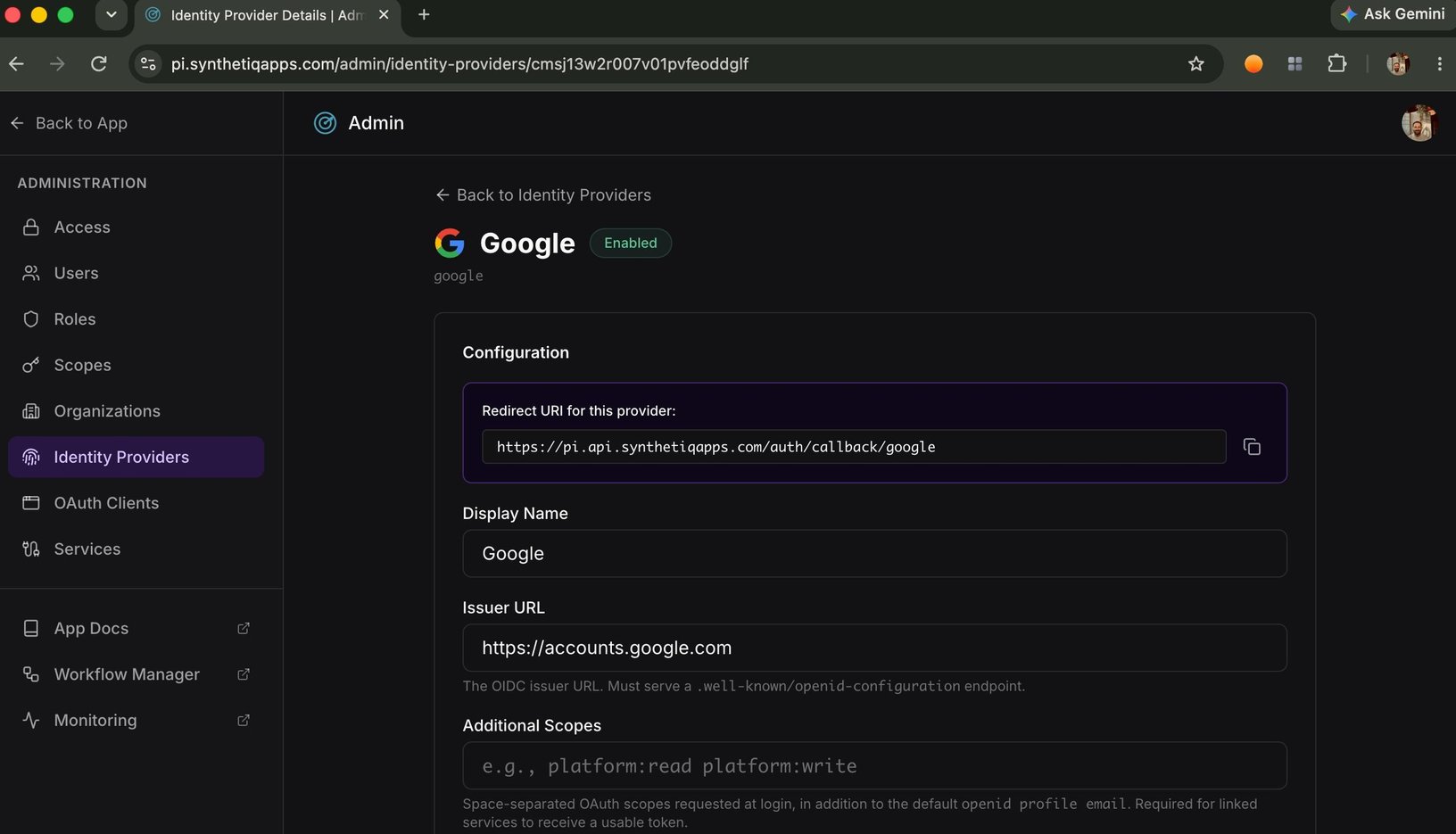
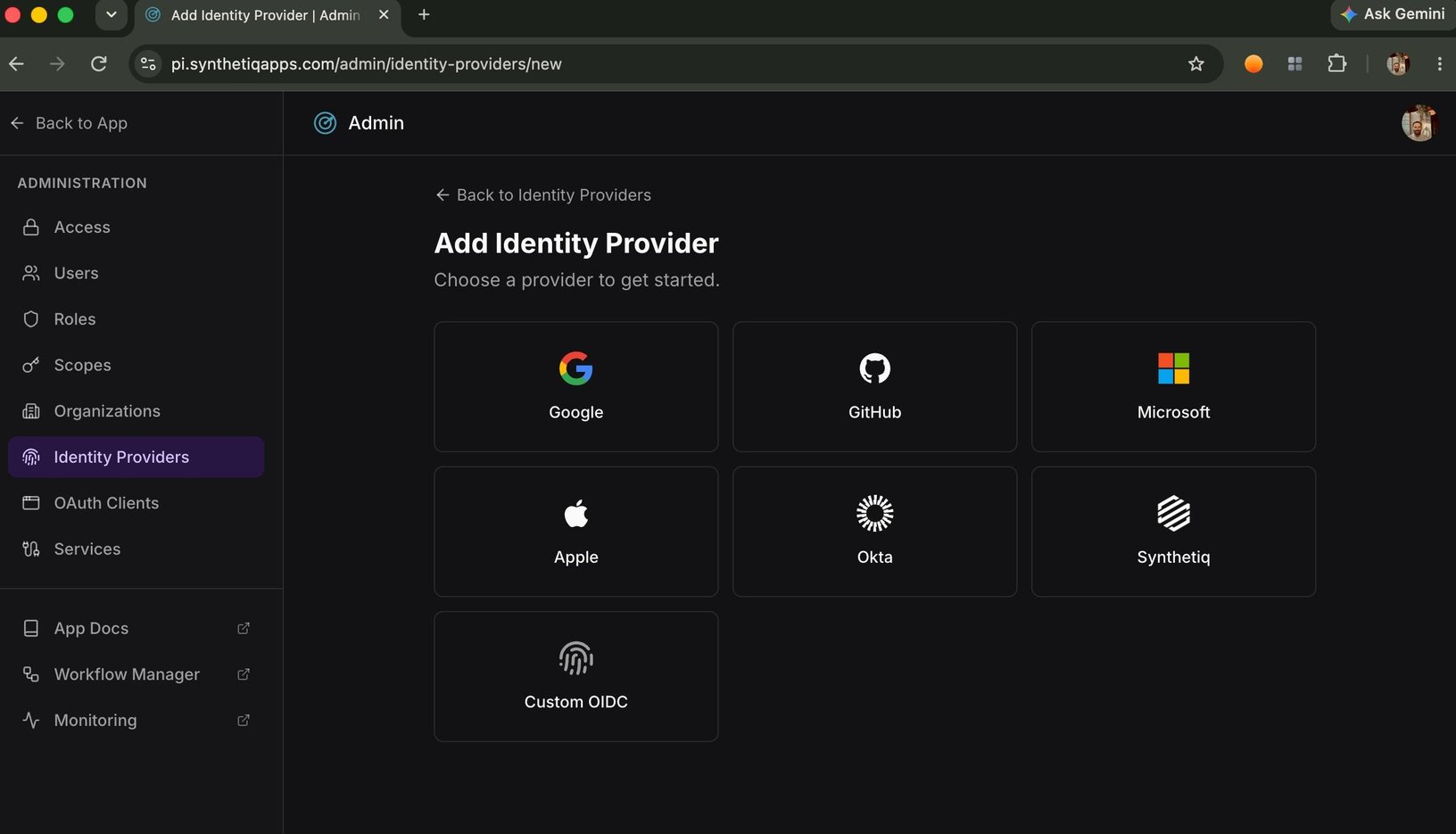
That is the interesting part of Synthetiq to me. It is trying to bring the work around the app into the same loop: a growing PRD, visual feedback, recorded demos, authentication, version history, deployment, and the rest of what gets an interface in front of another person.
None of those features is product strategy. Together, they reduce the distance between an idea and something you can actually launch. The point is not just that an app appears faster. It is that the context, changes, and operational work can stay connected to what is being built.
That also changes what good builders need to be good at. It is not about knowing every new model or forcing AI into every workflow. It is about building a practical system for seeing an idea through.
- What has to be true before a customer sees this?
- What context will the next version need?
- What feedback would change the direction?
- Who needs to review the release?
- What is the smallest useful step toward something real?
The best AI-native builders will work inside those questions. They will help turn an idea into an application while keeping the work around it understandable, shareable, and current. A first version may come faster. What matters is whether the product holds together after the prompt.
That is the work after the prompt. AI makes more things possible to build. The craft is getting them to the point where they are worth launching.